
Homemade Pizza Dough Recipe
🍽️ Ready to transform your pizza nights? This homemade pizza dough recipe delivers crispy, chewy, authentic Italian crust that rivals any pizzeria.
Making a homemade pizza dough recipe from scratch is easier than you think. With just five basic ingredients and simple techniques, you'll create restaurant-quality pizza at home. Furthermore, the satisfaction of pulling a perfectly baked pizza from your oven—with crust you made yourself—is incomparable.
This comprehensive guide walks you through every step of creating the perfect pizza dough. Whether you're a beginner or experienced baker, these techniques ensure consistent, delicious results. Additionally, you'll learn professional tips that transform ordinary dough into extraordinary crust with incredible flavor and texture.
📋 Table of Contents
▼
- 🌟 Understanding Homemade Pizza Dough Recipe Fundamentals
- ⚖️ Advantages and Disadvantages of Making Homemade Pizza Dough
- 🎯 Professional Tips for Perfect Homemade Pizza Dough Recipe Results
- 📚 Variations and Customizations for Your Homemade Pizza Dough Recipe
- 💡 Storage and Make-Ahead Strategies for Pizza Dough
- 📖 Recipe Card
- ❓ FAQ
🌟 Understanding Homemade Pizza Dough Recipe Fundamentals
Before you begin making your homemade pizza dough recipe, understanding the science behind each ingredient ensures better results. Knowledge of these fundamentals transforms you from a recipe follower into a confident pizza baker.
The Role of Yeast in Pizza Dough
Yeast is the living organism that makes your homemade pizza dough recipe rise and develop flavor. Active dry yeast ferments the dough, creating carbon dioxide bubbles that make the crust light and airy. Therefore, using fresh yeast and proper water temperature (around 110°F) activates these microorganisms effectively.
Gluten Development and Kneading
Kneading develops gluten strands in your homemade pizza dough recipe, creating the structure that holds gas bubbles. This process takes 8-10 minutes by hand or 5-6 minutes with a stand mixer. Consequently, proper kneading produces dough with the ideal chewy texture that characterizes authentic pizza crust.
- ✓ Fresh yeast ensures proper fermentation and rise
- ✓ Proper water temperature activates yeast (105-110°F)
- ✓ Adequate kneading develops gluten network
- ✓ Olive oil adds flavor and improves texture
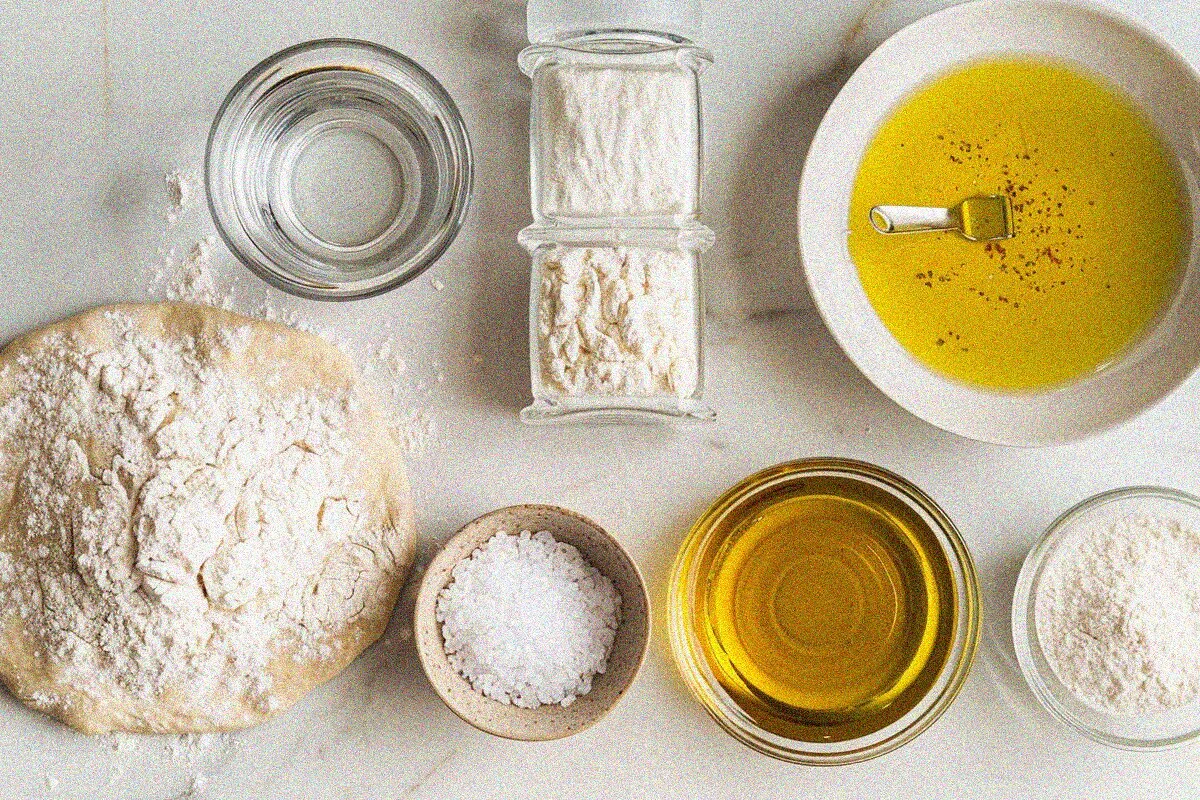
Simple ingredients create exceptional homemade pizza dough recipe results
⚖️ Advantages and Disadvantages of Making Homemade Pizza Dough
Understanding both benefits and challenges helps you prepare for success with your homemade pizza dough recipe. This balanced perspective ensures realistic expectations and better outcomes.
Making an Informed Decision
Homemade pizza dough offers numerous advantages, but it also requires time and attention. Moreover, knowing what to expect helps you troubleshoot problems and celebrate successes. This section breaks down the practical considerations of making pizza from scratch.
✓ Advantages
- Complete control over ingredients and quality
- Significantly cheaper than ordering delivery pizza
- Customizable flavor with different flours and techniques
- Fresher, better-tasting crust than frozen alternatives
- Can make dough ahead and freeze for convenience
- Educational experience teaching baking fundamentals
- Impressive homemade results that impress family and friends
- No preservatives or additives in your pizza
✗ Disadvantages
- Requires 2-3 hours total time including rising
- Yeast must be fresh and properly activated
- Dough can be sticky and challenging for beginners
- Oven temperature accuracy affects results
- Rising time varies with room temperature
- Requires some practice to master stretching technique
- Takes more effort than ordering delivery
- Equipment like pizza stone or peel helpful but not required
🎯 Professional Tips for Perfect Homemade Pizza Dough Recipe Results
These expert techniques separate good pizza from exceptional pizza. Implementing these tips into your homemade pizza dough recipe process elevates your results significantly.
Temperature Control and Timing
Temperature dramatically affects your homemade pizza dough recipe. Water temperature should be 105-110°F to activate yeast properly. Additionally, room temperature influences rising time—warmer kitchens speed fermentation while cooler rooms slow it down. Monitor your dough and let it rise until doubled, regardless of exact time.
Shaping and Stretching Techniques
Stretching your homemade pizza dough recipe requires gentle handling to preserve air bubbles. Start from the center and work outward, using your fingertips to gently stretch the dough. Therefore, avoid using a rolling pin, which deflates the carefully developed gas structure that creates a light, airy crust.
- ✓ Use precise water temperature for yeast activation
- ✓ Let dough rise until visibly doubled in size
- ✓ Stretch dough gently from center outward
- ✓ Use pizza stone preheated to 475°F
- ✓ Add toppings sparingly to prevent soggy crust
📚 Variations and Customizations for Your Homemade Pizza Dough Recipe
Your homemade pizza dough recipe serves as a foundation for creative experimentation. Furthermore, simple modifications create entirely different flavor profiles and textures.
Flour Variations and Specialty Doughs
Different flours produce different results in your homemade pizza dough recipe. Bread flour creates chewier crust with more gluten development, while whole wheat flour adds nutty flavor and density. In particular, you can substitute up to 25% of all-purpose flour with whole wheat without significantly altering the dough's characteristics.
Flavor Enhancements and Seasonings
Elevate your homemade pizza dough recipe by adding herbs and seasonings. Try incorporating garlic powder, Italian seasoning, or fresh rosemary into the dough itself. Additionally, brushing the crust edge with garlic-infused olive oil before baking creates irresistible flavor. For more delicious recipes, explore our Quick Weeknight Dinners: 10 Easy Recipes Ready in 30 Minutes for additional pizza topping inspiration.
- ✓ Substitute 25% bread flour for chewier texture
- ✓ Add Italian herbs directly to dough
- ✓ Brush crust with garlic-infused olive oil
- ✓ Try cornmeal dusting for crispy bottom
- ✓ Experiment with honey for subtle sweetness

Properly risen dough indicates successful homemade pizza dough recipe preparation
💡 Storage and Make-Ahead Strategies for Pizza Dough
Planning ahead makes homemade pizza nights convenient and stress-free. Your homemade pizza dough recipe becomes even more practical with proper storage techniques.
Refrigeration and Freezing Methods
Store your homemade pizza dough recipe in the refrigerator for up to 3 days in an oiled container. Cold fermentation actually improves flavor by developing more complex taste compounds. Consequently, refrigerated dough often produces superior results compared to same-day dough. For longer storage, freeze dough for up to 3 months in freezer bags.
Thawing and Preparation Timing
Thaw frozen homemade pizza dough recipe overnight in the refrigerator, then bring to room temperature 30 minutes before shaping. Therefore, you can prepare dough weeks ahead and enjoy fresh pizza whenever you want. This strategy works perfectly for busy families seeking convenient homemade options. Additionally, check out One Pot Pasta Recipes Simple: Easy 15-Minute Weeknight Dinners for complementary meal ideas.
- ✓ Refrigerate dough up to 3 days in oiled container
- ✓ Cold fermentation develops superior flavor
- ✓ Freeze dough for up to 3 months
- ✓ Thaw overnight in refrigerator before use
- ✓ Bring to room temperature 30 minutes before shaping
📖 Recipe Card
🥘 Ingredients
- 2 cups all-purpose flour
- 1 cup granulated sugar
- 3 large eggs
- 1/2 cup unsalted butter, softened
- 2 tsp vanilla extract
- 2 tsp baking powder
- 1/2 tsp salt
- 3/4 cup whole milk
👨🍳 Instructions
- Preheat your oven to 350°F (175°C). Grease and flour a 9-inch round cake pan.
- In a medium bowl, whisk together flour, baking powder, and salt. Set aside.
- In a large bowl, cream together butter and sugar until light and fluffy, about 3-4 minutes.
- Beat in eggs one at a time, then add vanilla extract.
- Alternate adding flour mixture and milk, beginning and ending with flour mixture.
- Pour batter into prepared pan and smooth the top.
- Bake for 30-35 minutes until a toothpick inserted in center comes out clean.
- Cool in pan for 10 minutes, then turn out onto a wire rack to cool completely.
📊 Nutrition Information
❓ Frequently Asked Questions
Absolutely! Homemade pizza dough recipe works perfectly with hand-kneading. Mix ingredients in a bowl, then knead on a floured surface for 8-10 minutes until smooth and elastic. Hand-kneading takes slightly longer but produces equally excellent results. Many traditional pizzerias still use hand-kneading methods exclusively.
Sticky dough usually indicates too much water or insufficient kneading. Add flour gradually (one tablespoon at a time) if dough seems overly wet. However, some stickiness is normal—that’s what creates tender crust. If using a stand mixer, knead for the full 5-6 minutes to develop gluten properly. Room humidity also affects dough consistency.
Use water between 105-110°F (40-43°C) for optimal yeast activation. Too-hot water kills yeast, while too-cold water slows fermentation. Use a kitchen thermometer for accuracy. If you don’t have a thermometer, water should feel warm but not hot to your inner wrist—similar to a comfortable bath temperature.
Yes! Instant yeast (also called bread machine yeast) works in homemade pizza dough recipe. Use the same amount as active dry yeast—it’s simply finer granules that activate slightly faster. Both produce excellent results. Some bakers prefer instant yeast because it ferments slightly quicker, reducing total preparation time.
Properly risen homemade pizza dough recipe should approximately double in size. To test, poke the dough gently with your finger—if the indentation slowly springs back halfway, it’s perfectly risen. If it springs back completely, it needs more time. If it doesn’t spring back at all, it’s overproofed. Visual inspection combined with this poke test ensures perfect timing.
A pizza stone enhances results but isn’t required for homemade pizza dough recipe. Preheated pizza stones distribute heat evenly, creating crispier crust. However, you can use an inverted baking sheet or cast iron skillet as alternatives. Preheat whatever surface you use for at least 30 minutes at 475°F before adding your pizza.
🎉 Final Thoughts
Mastering homemade pizza dough recipe transforms your pizza nights from ordinary to exceptional. This straightforward recipe, combined with proper technique and attention to detail, produces restaurant-quality results in your own kitchen. Therefore, whether you're cooking for family or impressing guests, homemade pizza delivers impressive results.
The beauty of homemade pizza dough recipe lies in its simplicity and versatility. With just five ingredients and basic techniques, you create the foundation for endless pizza variations. Furthermore, the skills you develop—kneading, fermentation, and shaping—apply to numerous other bread-based recipes. Once you've experienced the joy of pulling a perfectly baked pizza from your oven, you'll understand why homemade pizza is worth the effort.
Key Takeaways:
- ★Use proper water temperature (105-110°F) for yeast activation
- ★Knead thoroughly for 8-10 minutes to develop gluten
- ★Let dough rise until visibly doubled in size
- ★Stretch dough gently to preserve air bubbles
- ★Use minimal toppings for crispy, perfect crust
Don’t wait another day—gather your ingredients and create this homemade pizza dough recipe today. Your family will thank you, and you’ll discover a new favorite cooking skill. For additional dinner inspiration, explore our classic dessert recipes homemade: Master Traditional Treats Today collection.
Homemade pizza dough recipe represents more than food preparation—it's an investment in quality, flavor, and family memories. The aroma of pizza baking, the satisfaction of creating something delicious from scratch, and the joy of sharing it with loved ones make homemade pizza truly special. Start your homemade pizza journey today and experience the difference.