
Traditional Custard Tart Recipe
🍽️ Discover the magic of a traditional custard tart recipe that combines buttery pastry with velvety custard filling. This timeless British classic deserves a permanent place in your baking repertoire.
The traditional custard tart recipe represents centuries of British culinary heritage. This iconic dessert features a delicate pastry shell filled with smooth, creamy custard infused with warm nutmeg. Furthermore, making a traditional custard tart recipe at home is more achievable than you might think. With proper technique and quality ingredients, you'll create a bakery-worthy tart that impresses family and friends.
What makes this traditional custard tart recipe truly special is the balance between crispy pastry and silky filling. The pastry must be flaky yet sturdy enough to hold the custard. Meanwhile, the custard needs to be perfectly set without being overcooked. Additionally, the subtle nutmeg topping adds warmth and sophistication to this classic dessert.
📋 Table of Contents
▼
- 🌟 Understanding the Traditional Custard Tart Recipe
- ⚖️ Advantages and Considerations of This Traditional Custard Tart Recipe
- 🎯 Essential Techniques for Perfect Traditional Custard Tart Recipe Results
- 📚 Variations and Customizations for Traditional Custard Tart Recipe
- 💡 Storage and Make-Ahead Strategies for Traditional Custard Tart Recipe
- 📖 Recipe Card
- ❓ FAQ
🌟 Understanding the Traditional Custard Tart Recipe
To master a traditional custard tart recipe, you need to understand its two essential components: the pastry and the custard. Each element requires specific techniques and attention to detail.
The Perfect Pastry Foundation
The pastry in a traditional custard tart recipe must be crisp and buttery. Therefore, using cold butter is crucial for creating flaky layers. The key is to keep all ingredients cold throughout the process. When water touches cold butter, it creates steam pockets that produce flakiness. Additionally, minimal mixing prevents gluten development, which would make the pastry tough.
The Silky Custard Filling
A traditional custard tart recipe relies on a simple custard made from eggs, milk, and sugar. The custard must reach the perfect consistency—creamy but set. Consequently, baking temperature and time are critical. Too high a temperature causes curdling, while insufficient baking leaves the filling runny. The nutmeg topping, meanwhile, provides the signature warm spice that defines this classic dessert.
- ✓ Cold butter creates flaky pastry layers in traditional custard tart recipe
- ✓ Minimal mixing prevents tough pastry texture
- ✓ Egg yolks create rich, smooth custard filling
- ✓ Nutmeg adds warmth and authentic flavor to traditional custard tart recipe
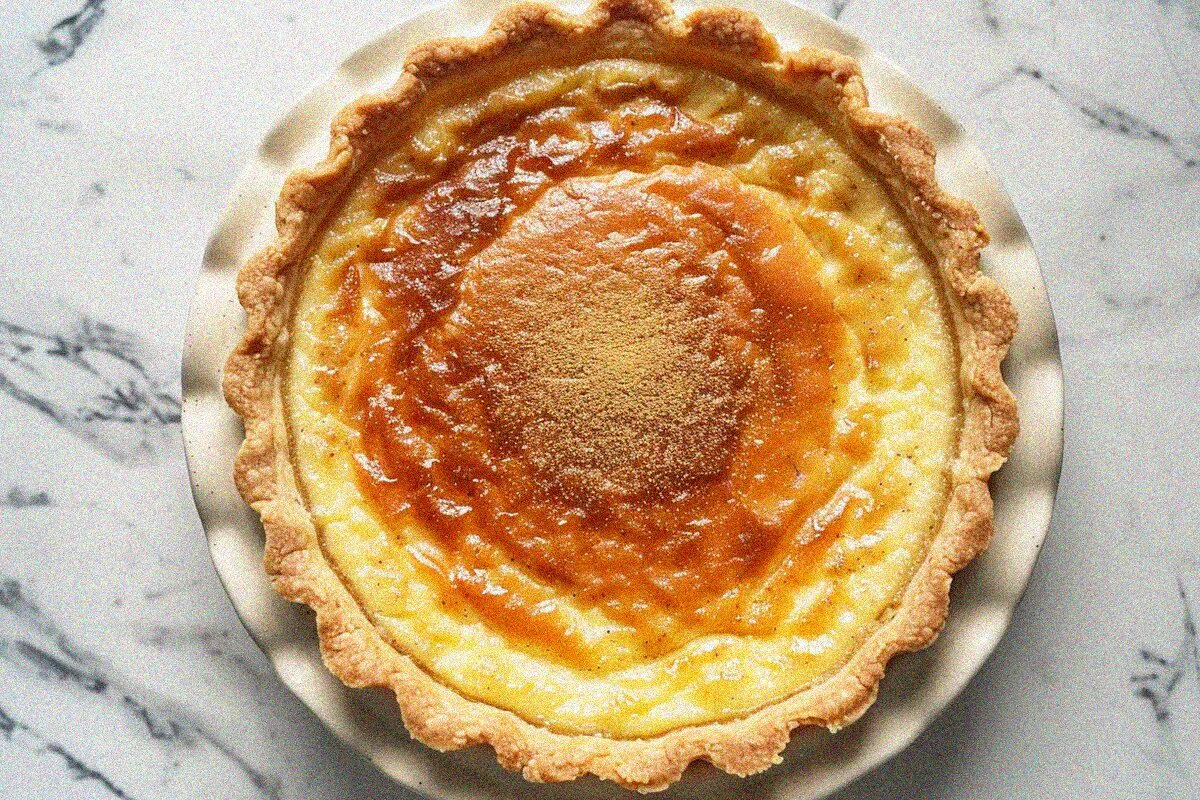
A perfectly baked traditional custard tart recipe with golden pastry and silky custard filling
⚖️ Advantages and Considerations of This Traditional Custard Tart Recipe
Before committing to baking a traditional custard tart recipe, consider both the benefits and challenges. This knowledge helps ensure success and realistic expectations.
Why This Recipe Excels
A traditional custard tart recipe offers numerous advantages for home bakers. First, the ingredients are simple and accessible. Second, the technique is learnable with practice. Moreover, the finished tart impresses guests and tastes absolutely delicious. Furthermore, this traditional custard tart recipe can be prepared ahead and reheated, making it ideal for entertaining.
✓ Advantages
- ✓ Uses simple, readily available ingredients
- ✓ Impressive presentation for special occasions
- ✓ Can be made ahead and stored for several days
- ✓ Versatile—pairs well with tea, coffee, or dessert wine
- ✓ Teaches valuable pastry-making skills
- ✓ Relatively quick baking time compared to other desserts
- ✓ Budget-friendly compared to bakery purchases
- ✓ Naturally elegant appearance without decoration
✗ Disadvantages
- ✗ Requires blind baking to prevent soggy pastry
- ✗ Custard can curdle if overheated
- ✗ Pastry requires cold ingredients and careful handling
- ✗ Timing is critical for perfect texture
- ✗ Contains eggs and dairy (not vegan)
- ✗ Requires chilling time before baking
- ✗ Can be sensitive to oven temperature variations
- ✗ Requires tart pan with removable bottom
🎯 Essential Techniques for Perfect Traditional Custard Tart Recipe Results
Mastering specific techniques elevates your traditional custard tart recipe from good to exceptional. These professional methods ensure consistent, beautiful results.
Blind Baking Technique
Blind baking is essential in a traditional custard tart recipe to prevent a soggy crust. This process involves pre-baking the pastry shell with weights before adding the custard. Therefore, the pastry sets and becomes crisp. Additionally, blind baking ensures the bottom is cooked through before the wet filling is added. Consequently, you achieve the perfect contrast between crispy pastry and creamy filling.
Temperature Control for Custard
Temperature management is critical when preparing a traditional custard tart recipe. The custard should bake at a moderate temperature—375°F is ideal. This allows the filling to set gently without curdling. Meanwhile, the pastry continues to brown slightly. In fact, many experienced bakers reduce heat slightly after 20 minutes to prevent the custard from cooking too quickly.
- ✓ Use parchment and weights for blind baking
- ✓ Maintain 375°F for consistent results in traditional custard tart recipe
- ✓ Whisk custard ingredients thoroughly before pouring
- ✓ Cool completely before slicing for clean portions
📚 Variations and Customizations for Traditional Custard Tart Recipe
While the classic traditional custard tart recipe is timeless, creative variations allow you to personalize this dessert. These adaptations maintain the essence while adding your unique touch.
Flavor Enhancements
You can elevate a traditional custard tart recipe with subtle flavor additions. For example, adding vanilla extract enhances the custard's complexity. Additionally, some bakers infuse the milk with cinnamon sticks or cardamom pods before making the custard. Therefore, you create a traditional custard tart recipe with deeper, more sophisticated flavors. Moreover, a touch of brandy or rum adds richness without overwhelming the delicate custard.
Creative Toppings and Serving Ideas
While traditional custard tart recipe typically features only nutmeg, modern variations include fresh berries, candied citrus peel, or caramelized sugar. Consequently, you can serve this classic dessert in contemporary ways. Furthermore, pairing traditional custard tart recipe with fresh fruit preserves or fruit compotes adds brightness. For instance, Fruit Desserts: Easy Recipes for Fresh & Delicious Homemade Treats offers complementary serving suggestions.
- ✓ Add vanilla extract for enhanced flavor complexity
- ✓ Infuse milk with spices for traditional custard tart recipe variations
- ✓ Top with fresh berries for color and freshness
- ✓ Serve with fruit compotes or preserves

A beautifully sliced serving reveals the perfect layers of crispy pastry and silky custard in this traditional custard tart recipe
💡 Storage and Make-Ahead Strategies for Traditional Custard Tart Recipe
Planning ahead is essential when preparing a traditional custard tart recipe for entertaining. Understanding proper storage extends the life of your creation and reduces stress.
Proper Storage Methods
A traditional custard tart recipe stores well when handled correctly. Keep the cooled tart in an airtight container at room temperature for up to three days. Therefore, you can prepare it well in advance. Additionally, refrigeration extends shelf life to five days. Meanwhile, freezing works for up to one month, though the pastry texture changes slightly after thawing.
Make-Ahead Timeline
For optimal results with traditional custard tart recipe, prepare components separately. You can make the pastry dough two days ahead and refrigerate it. Consequently, you save time on serving day. Furthermore, blind baking the shell the day before is perfectly acceptable. In fact, this approach reduces last-minute stress. Finally, prepare the custard filling and bake the complete tart the morning of serving for the best texture and flavor.
- ✓ Store traditional custard tart recipe in airtight container
- ✓ Room temperature storage lasts up to three days
- ✓ Refrigeration extends shelf life to five days
- ✓ Prepare pastry dough two days in advance
- ✓ Bake complete traditional custard tart recipe same day for best results
📖 Recipe Card
🥘 Ingredients
- 2 cups all-purpose flour
- 1 cup granulated sugar
- 3 large eggs
- 1/2 cup unsalted butter, softened
- 2 tsp vanilla extract
- 2 tsp baking powder
- 1/2 tsp salt
- 3/4 cup whole milk
👨🍳 Instructions
- Preheat your oven to 350°F (175°C). Grease and flour a 9-inch round cake pan.
- In a medium bowl, whisk together flour, baking powder, and salt. Set aside.
- In a large bowl, cream together butter and sugar until light and fluffy, about 3-4 minutes.
- Beat in eggs one at a time, then add vanilla extract.
- Alternate adding flour mixture and milk, beginning and ending with flour mixture.
- Pour batter into prepared pan and smooth the top.
- Bake for 30-35 minutes until a toothpick inserted in center comes out clean.
- Cool in pan for 10 minutes, then turn out onto a wire rack to cool completely.
📊 Nutrition Information
❓ Frequently Asked Questions
The primary difference is the crust. A traditional custard tart recipe uses a shortcrust pastry in a shallow tart pan with a removable bottom, while custard pie typically uses a standard pie crust in a deeper pie dish. Additionally, traditional custard tart recipe has a more refined presentation and serves more people. The baking time and temperature may also differ slightly between the two.
A soggy bottom usually indicates insufficient blind baking. Therefore, ensure you pre-bake the pastry shell for at least 15 minutes with weights before adding the custard filling. Additionally, make sure your oven temperature is accurate and the pastry is fully set before pouring in the custard. Furthermore, using a baking sheet preheated in the oven helps conduct heat to the tart bottom, ensuring it cooks properly in your traditional custard tart recipe.
While a tart pan with a removable bottom is ideal for a traditional custard tart recipe, you can use a pie dish as an alternative. However, the presentation will be slightly different. Additionally, you’ll need to serve slices directly from the dish rather than showcasing the beautiful pastry bottom. A 9-inch pie dish works well as a substitute for a traditional custard tart recipe.
The traditional custard tart recipe is done when the custard is set but still slightly jiggly in the very center. Therefore, gently shake the tart—the filling should wobble slightly but not slosh around. Additionally, the pastry should be golden brown. A toothpick inserted near the center should come out mostly clean with just a tiny bit of custard. Consequently, the traditional custard tart recipe will continue cooking slightly as it cools.
Fresh, freshly grated nutmeg is essential for an authentic traditional custard tart recipe. Therefore, purchase whole nutmeg seeds and grate them using a microplane or fine grater. Ground nutmeg loses potency over time, so it won’t provide the same warm, complex flavor. Additionally, the aroma of freshly grated nutmeg elevates the entire traditional custard tart recipe experience. Store whole nutmeg seeds in an airtight container away from light for maximum freshness.
Yes, a traditional custard tart recipe is excellent for entertaining. You can prepare the pastry dough two days in advance and refrigerate it. Furthermore, you can blind bake the shell the day before. Then, prepare and bake the complete traditional custard tart recipe the morning of your event. This approach ensures the best texture while minimizing last-minute stress. The finished tart stays fresh for three days at room temperature in an airtight container.
🎉 Final Thoughts
The traditional custard tart recipe represents timeless elegance and culinary heritage. Mastering this classic dessert opens doors to countless variations while building essential baking skills. Moreover, the satisfaction of creating a bakery-quality tart at home is immeasurable. Furthermore, this traditional custard tart recipe proves that simple ingredients and proper technique create extraordinary results.
Whether you’re preparing a traditional custard tart recipe for a special occasion or simply treating yourself to a classic dessert, the effort invested pays dividends. The combination of crispy pastry and silky custard never fails to impress. Additionally, the knowledge gained from mastering this traditional custard tart recipe applies to countless other pastry projects. Consequently, you’ll find yourself returning to this recipe repeatedly. In fact, many bakers consider a traditional custard tart recipe an essential skill worth perfecting. For more inspiration, explore classic dessert recipes homemade: Master Traditional Treats Today for additional ideas.
Key Takeaways:
- ★Keep all pastry ingredients cold for maximum flakiness
- ★Blind bake the shell to prevent soggy pastry
- ★Monitor custard temperature carefully to prevent curdling
- ★Use freshly grated nutmeg for authentic flavor
- ★Cool completely before slicing for clean presentation
Ready to create your own traditional custard tart recipe? Gather your ingredients today and embark on this rewarding baking journey. Your family and guests will appreciate the homemade elegance of this classic British dessert.
A traditional custard tart recipe is more than just a dessert—it's a connection to culinary tradition and a testament to the power of simple, quality ingredients combined with proper technique. Each time you bake this classic, you're part of a heritage spanning generations. Embrace the process, trust your skills, and enjoy the remarkable results of your traditional custard tart recipe.